Sitz baths for hemorrhoids: how to make and use one
If you look up one home remedy for hemorrhoids, it will be the sitz bath. It is the single most consistently recommended piece of self-care, in obstetric wards, colorectal clinics, and every reputable patient handout. It is also almost free, and most people do it slightly wrong. Here is how to do it right.
What a sitz bath actually is
A sitz bath just means sitting in a few inches of warm water so that your hips and bottom are submerged. The name comes from the German sitzen, to sit. You can do it two ways: in a clean bathtub with a few inches of water, or with an inexpensive plastic basin that sits over the rim of your toilet, which uses less water and is easier to manage several times a day.
That is the whole idea. No special equipment is required, though the toilet-seat basins are convenient and cost very little.
Why warm water helps hemorrhoids
Hemorrhoids are swollen veins in and around the anus, and the discomfort comes from inflammation, muscle spasm in the anal sphincter, and irritated skin. Warm water addresses all three at once. It increases blood flow to the area, which is what inflamed tissue needs to settle and heal, and it relaxes the sphincter muscle, which eases the aching, spasming feeling that makes sitting miserable. It also gently cleans the area without the friction of dry toilet paper.
How to make one, step by step
- Fill with a few inches of warm water. In a tub, three to four inches is plenty. With a basin, fill to the line so the water covers the area when you sit.
- Check the temperature. Comfortably warm, like a relaxing bath, not hot. If it reddens your skin, it is too hot and can aggravate inflamed tissue.
- Sit and soak for 10 to 15 minutes. Relax your bottom and let the muscles ease. Set a timer so you are not tempted to sit for half an hour, which just waterlogs the skin.
- Pat dry, gently. Use a soft towel and pat rather than rub, or let the area air-dry. Follow with any cream your provider is fine with.
- Repeat two to three times a day, and always after a bowel movement, which is when the area is most irritated.
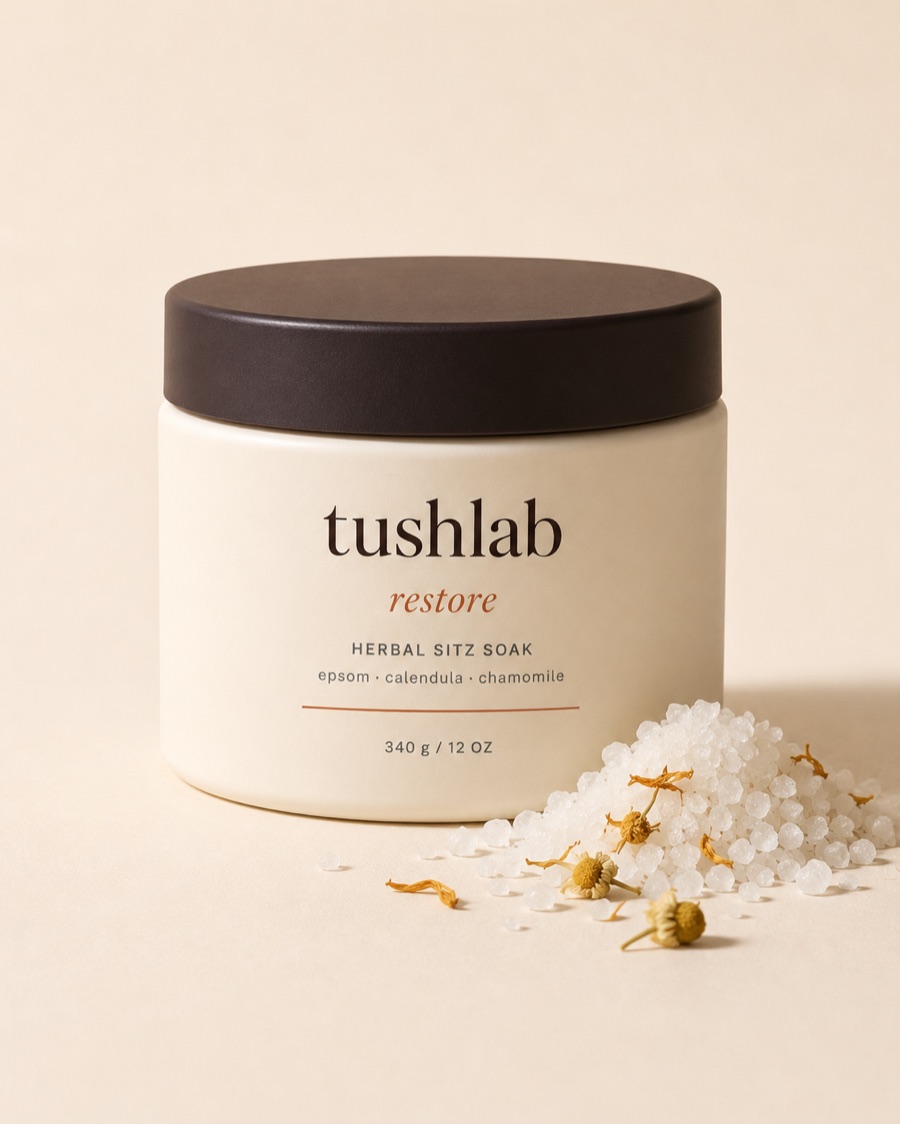
Restore: a sitz soak you'll actually keep up
The hardest part of a sitz bath is doing it three times a day for a week. Tushlab's Restore is an Epsom-and-botanical soak designed to make the ritual something you look forward to, part of the three-step Trio.
Reserve free, lock 20% off → No payment today · Ships fall 2026 · Cancel anytimeWhat to add to the water
Plain warm water is genuinely effective on its own, so do not feel you need to buy anything. That said, two common additions make the soak more comfortable:
- Epsom salt is the traditional choice. It dissolves into warm water easily and many people find it soothing.
- Gentle botanicals such as calendula and chamomile are long used for irritated skin and add to the calming feel of the soak.
What to skip: anything fragranced, foaming, or harsh. Bubble bath, essential oils applied directly, and strong antiseptics can sting and irritate the very skin you are trying to calm.
Pregnancy, postpartum, and safety
Warm sitz baths are one of the first things recommended for hemorrhoids in pregnancy, and they are standard care after delivery for both hemorrhoids and perineal healing. Keep the water warm rather than hot, since very hot baths are discouraged in pregnancy, and check with your OB or midwife if you have any doubt. For a fuller picture, see our guides on hemorrhoids during pregnancy and postpartum recovery.
Common questions
How long should you sit in a sitz bath?
Ten to fifteen minutes, two to three times a day, and after every bowel movement. Longer is not better.
Hot or warm water?
Warm. Hot water that reddens the skin can irritate inflamed tissue and, in pregnancy, is best avoided.
How many days until it helps?
Many people feel relief the same day, with steady improvement over one to two weeks of consistent soaking alongside softer stools and less straining.
This guide is general information, not medical advice, and doesn't replace a conversation with your OB, midwife, or doctor. Sitz baths are a widely recommended supportive measure; persistent bleeding, severe pain, or symptoms that don't improve should be assessed by a healthcare professional.